John of Lancaster
Henry IV, Part 2John of Lancaster is a royal prince whose most consequential appearance is as the crown’s representative in the forest confrontation with the rebels. There he receives their articles of grievance, approves them in principle, and then disputes what his assurance obliges him to do. His farewell to Falstaff at the play’s close adds a quieter measure of his authority: even in parting, he speaks from his elevated position while granting Falstaff a measure of consideration.
Identity and Position
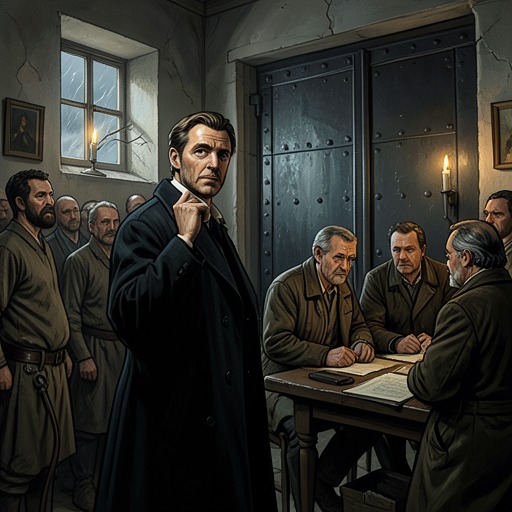
The stage directions identify him as Prince John of Lancaster. He enters with Westmoreland, officers, and others from the opposite side of the forest from Mowbray, the Archbishop of York, Hastings, and their company. The staging places him within the royal party before he speaks: he is not a detached observer of the dispute but one of the representatives empowered to meet those who have taken up arms.
The Forest Negotiation
John addresses Mowbray as his cousin, a form of address that acknowledges kinship even as the two sides face one another politically. When the rebels ask him to answer their articles directly, he says that he likes and allows them, swearing by the honour of his blood. His initial response presents him as willing to hear their stated grievances rather than reject them outright.
That assurance becomes contentious when the Archbishop of York accuses him of breaking faith. John replies that he had pledged the Archbishop nothing: what he had promised, he says, was redress for the grievances. The distinction is central to the exchange. John’s words preserve a commitment to address the complaints while denying that he made the broader pledge the Archbishop claims; the scene makes the precise terms of political assurance as important as the grievances themselves.
Conflict over the Future
Hastings predicts that the quarrel will pass from heir to heir for as long as England has generations. John rebukes him as unable to fathom the depths of future times. Their disagreement sets a sweeping forecast of inherited conflict against John’s dismissal of Hastings’s claim to know what lies ahead. The exchange gives the negotiation a historical horizon: its participants argue not only over present redress but over whether their conflict will define the generations to come.
Falstaff and the Measure of Authority
At the end, John bids Falstaff farewell and says that, in his own condition, he will speak of Falstaff better than Falstaff deserves. The remark is neither a full reconciliation nor a harsh denunciation. It couples a courteous parting with an explicit judgment of Falstaff’s deserts, and John’s reference to his condition underscores the difference in their standing. Together with the forest scene, this closing moment presents authority as something John exercises through both the interpretation of commitments and the measured language of separation.